
Screw Pile
We specialise in designing and installing screw pile underpinning solutions, a modern, efficient, and cost-effective method to stabilise structures affected by subsidence.
What is screw pile underpinning?

Screw piling is an advanced technique that provides a clear, faster and more sustainable alternative to traditional underpinning solutions.
Screw piles (also known as helical piles) are high-strength steel shafts with helical plates that are screwed into the ground using specialised hydraulic equipment. They are installed to a predetermined depth and torque to reach stable ground, transferring the weight of the building from weak surface soils to stronger layers below.
The piles are then connected to the foundations with custom-engineered brackets, which provide immediate load-bearing support and allows precise lifting or re-levelling of the structure if required.
Screw piling is ideal for stabilising structures on clay soils with a high Plasticity Index as this type of ground is prone to significant shrink-swell movement.
This method is also ideal for use on peat because the piles can be screwed through the soft upper layers and down into firm ground below to create reliable structural support.
What are the benefits of screw piling?
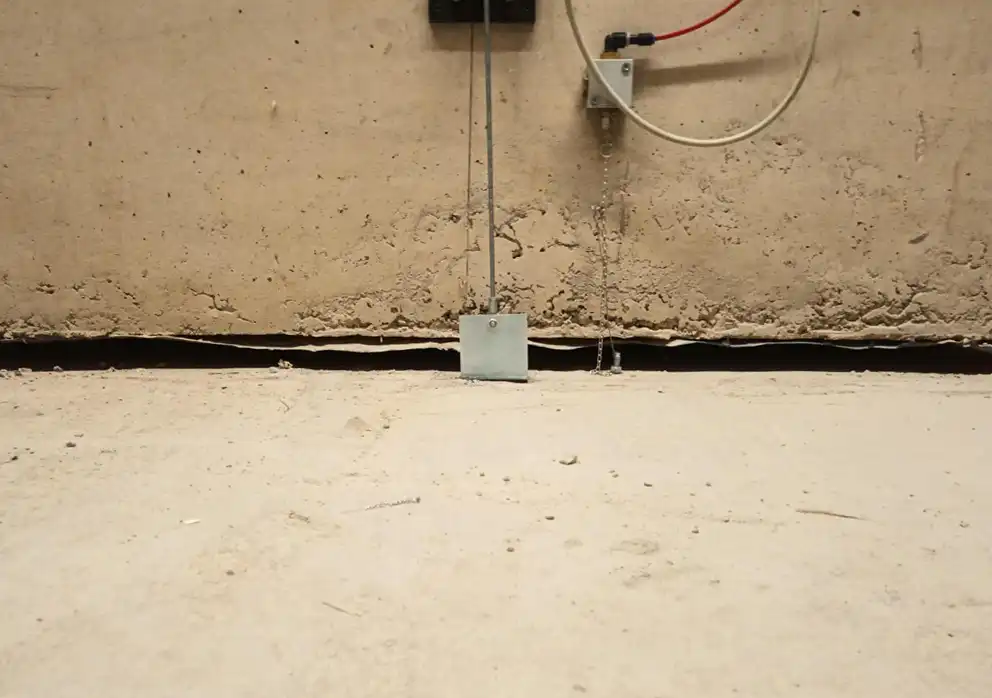
Screw piling offers numerous benefits:
• Minimal-excavation installation with no spoil, no mass concrete, and no need for large machinery
• Suitable for various ground conditions including soft and peaty soils
• Site-specific pile design based on detailed geotechnical assessment
• Full compliance with Eurocode 7 (EN1997-1) and UK certification standards, including BSI, BBA, CE, and NHBC
• Supported by a 20-year workmanship and material warranty
• Optional anti-heave sleeves for shallower applications
What is Mainmark's screw pile installation process?
We undertake a geotechnical investigation to establish the soil type and location of underground services.
Design the screw pile layout, considering the ground conditions, location and loads on foundations to be underpinned.
Dig a series of pits adjacent to the building to locate the footings requiring support.
We then install a screw pile into the firm ground below; torque readings confirm correct depth.
A specially designed bracket is installed on top of the screw pile and slotted beneath the footing.
A jacking system is used to raise the bracket, transferring the load to the new screw piles. In some instances, this can be used to lift the building back in position.
Once the load has been transferred to the screw piles and the structure is stable, the bracket is secured and jack removed.
The excavated area is then backfilled and rectified.
Think you need screw pile underpinning? Our dedicated team of experts is committed to understanding your unique needs and objectives, working closely with you to develop and execute.
Mainmark’s specialised in-house solutions
Our dedicated team of experts is committed to understanding your unique needs and objectives, working closely with you to develop and execute.
Featured Case Studies
A diverse group of passionate professionals, each bringing unique skills and experiences to drive innovation and excellence in every project we undertake.


Delivering exceptional outcomes to our
clients, partners and team
Our dedicated team of experts is committed to understanding your unique needs and objectives, working closely with you to develop and execute.

Technical
The combination of our proven ground improvement technologies and our experienced ground engineers enables us to re-level and re-support buildings affected by subsidence across various sectors.

Consultative
Our problem-solving approach and recommendation of ground engineering solutions sets us apart from the competition. The complexity of ground improvement requires a range of state-of-the-art technologies to meet both project and client requirements.

Trusted
We are trusted to present effective and creative solutions to many types of ground engineering problems in a wide range of sectors, including residential, industrial, commercial, civil engineering and infrastructure.
Get in Touch
Worried about wall cracks, ceiling cracks, or possible subsidence? Mainmark Ireland’s specialists are here to help. We’ll inspect, assess, and provide the most effective repair plan for your property.
Phone
Location
Mainmark Ground Engineering (IE), 3rd Floor, 40 Mespil Road, Dublin 4, D04 C2NA
Screw Pile
We specialise in designing and installing screw pile underpinning solutions, a modern, efficient, and cost-effective method to stabilise structures affected by subsidence.
What is screw pile underpinning?
Screw piling is an advanced technique that provides a clear, faster and more sustainable alternative to traditional underpinning solutions.
Screw piles (also known as helical piles) are high-strength steel shafts with helical plates that are screwed into the ground using specialised hydraulic equipment. They are installed to a predetermined depth and torque to reach stable ground, transferring the weight of the building from weak surface soils to stronger layers below.
The piles are then connected to the foundations with custom-engineered brackets, which provide immediate load-bearing support and allows precise lifting or re-levelling of the structure if required.
Screw piling is ideal for stabilising structures on clay soils with a high Plasticity Index as this type of ground is prone to significant shrink-swell movement.
This method is also ideal for use on peat because the piles can be screwed through the soft upper layers and down into firm ground below to create reliable structural support.
What are the benefits of screw piling?
Screw piling offers numerous benefits:
• Minimal-excavation installation with no spoil, no mass concrete, and no need for large machinery
• Suitable for various ground conditions including soft and peaty soils
• Site-specific pile design based on detailed geotechnical assessment
• Full compliance with Eurocode 7 (EN1997-1) and UK certification standards, including BSI, BBA, CE, and NHBC
• Supported by a 20-year workmanship and material warranty
• Optional anti-heave sleeves for shallower applications
What is Mainmark's screw pile installation process?
We undertake a geotechnical investigation to establish the soil type and location of underground services.
Design the screw pile layout, considering the ground conditions, location and loads on foundations to be underpinned.
Dig a series of pits adjacent to the building to locate the footings requiring support.
We then install a screw pile into the firm ground below; torque readings confirm correct depth.
A specially designed bracket is installed on top of the screw pile and slotted beneath the footing.
A jacking system is used to raise the bracket, transferring the load to the new screw piles. In some instances, this can be used to lift the building back in position.
Once the load has been transferred to the screw piles and the structure is stable, the bracket is secured and jack removed.
The excavated area is then backfilled and rectified.
Think you need screw pile underpinning? Our dedicated team of experts is committed to understanding your unique needs and objectives, working closely with you to develop and execute.
Mainmark’s specialised in-house solutions
Our dedicated team of experts is committed to understanding your unique needs and objectives, working closely with you to develop and execute.
Featured Case Studies
A diverse group of passionate professionals, each bringing unique skills and experiences to drive innovation and excellence in every project we undertake.
Delivering exceptional outcomes to our
clients, partners and team
Our dedicated team of experts is committed to understanding your unique needs and objectives, working closely with you to develop and execute.
Technical
The combination of our proven ground improvement technologies and our experienced ground engineers enables us to re-level and re-support buildings affected by subsidence across various sectors.
Consultative
Our problem-solving approach and recommendation of ground engineering solutions sets us apart from the competition. The complexity of ground improvement requires a range of state-of-the-art technologies to meet both project and client requirements.
Trusted
We are trusted to present effective and creative solutions to many types of ground engineering problems in a wide range of sectors, including residential, industrial, commercial, civil engineering and infrastructure.
Get in Touch
Worried about wall cracks, ceiling cracks, or possible subsidence? Mainmark Ireland’s specialists are here to help. We’ll inspect, assess, and provide the most effective repair plan for your property.
Phone
Location
Mainmark Ground Engineering (IE), 3rd Floor, 40 Mespil Road, Dublin 4, D04 C2NA
Screw Pile
We specialise in designing and installing screw pile underpinning solutions, a modern, efficient, and cost-effective method to stabilise structures affected by subsidence.
What is screw pile underpinning?
Screw piling is an advanced technique that provides a clear, faster and more sustainable alternative to traditional underpinning solutions.
Screw piles (also known as helical piles) are high-strength steel shafts with helical plates that are screwed into the ground using specialised hydraulic equipment. They are installed to a predetermined depth and torque to reach stable ground, transferring the weight of the building from weak surface soils to stronger layers below.
The piles are then connected to the foundations with custom-engineered brackets, which provide immediate load-bearing support and allows precise lifting or re-levelling of the structure if required.
Screw piling is ideal for stabilising structures on clay soils with a high Plasticity Index as this type of ground is prone to significant shrink-swell movement.
This method is also ideal for use on peat because the piles can be screwed through the soft upper layers and down into firm ground below to create reliable structural support.
What are the benefits of screw piling?
Screw piling offers numerous benefits:
• Minimal-excavation installation with no spoil, no mass concrete, and no need for large machinery
• Suitable for various ground conditions including soft and peaty soils
• Site-specific pile design based on detailed geotechnical assessment
• Full compliance with Eurocode 7 (EN1997-1) and UK certification standards, including BSI, BBA, CE, and NHBC
• Supported by a 20-year workmanship and material warranty
• Optional anti-heave sleeves for shallower applications
What is Mainmark's screw pile installation process?
We undertake a geotechnical investigation to establish the soil type and location of underground services.
Design the screw pile layout, considering the ground conditions, location and loads on foundations to be underpinned.
Dig a series of pits adjacent to the building to locate the footings requiring support.
We then install a screw pile into the firm ground below; torque readings confirm correct depth.
A specially designed bracket is installed on top of the screw pile and slotted beneath the footing.
A jacking system is used to raise the bracket, transferring the load to the new screw piles. In some instances, this can be used to lift the building back in position.
Once the load has been transferred to the screw piles and the structure is stable, the bracket is secured and jack removed.
The excavated area is then backfilled and rectified.
Think you need screw pile underpinning? Our dedicated team of experts is committed to understanding your unique needs and objectives, working closely with you to develop and execute.
Mainmark’s specialised in-house solutions
Our dedicated team of experts is committed to understanding your unique needs and objectives, working closely with you to develop and execute.
Featured Case Studies
A diverse group of passionate professionals, each bringing unique skills and experiences to drive innovation and excellence in every project we undertake.
Delivering exceptional outcomes to our
clients, partners and team
Our dedicated team of experts is committed to understanding your unique needs and objectives, working closely with you to develop and execute.
Technical
The combination of our proven ground improvement technologies and our experienced ground engineers enables us to re-level and re-support buildings affected by subsidence across various sectors.
Consultative
Our problem-solving approach and recommendation of ground engineering solutions sets us apart from the competition. The complexity of ground improvement requires a range of state-of-the-art technologies to meet both project and client requirements.
Trusted
We are trusted to present effective and creative solutions to many types of ground engineering problems in a wide range of sectors, including residential, industrial, commercial, civil engineering and infrastructure.
Get in Touch
Worried about wall cracks, ceiling cracks, or possible subsidence? Mainmark Ireland’s specialists are here to help. We’ll inspect, assess, and provide the most effective repair plan for your property.
Phone
Location
Mainmark Ground Engineering (IE), 3rd Floor, 40 Mespil Road, Dublin 4, D04 C2NA